
A little less light. A little less noise.
Sleep professionally: what darkness and quiet can do for your night
Give your surroundings a little attention. Choose a tool with a job to do.
Find your starting point ↓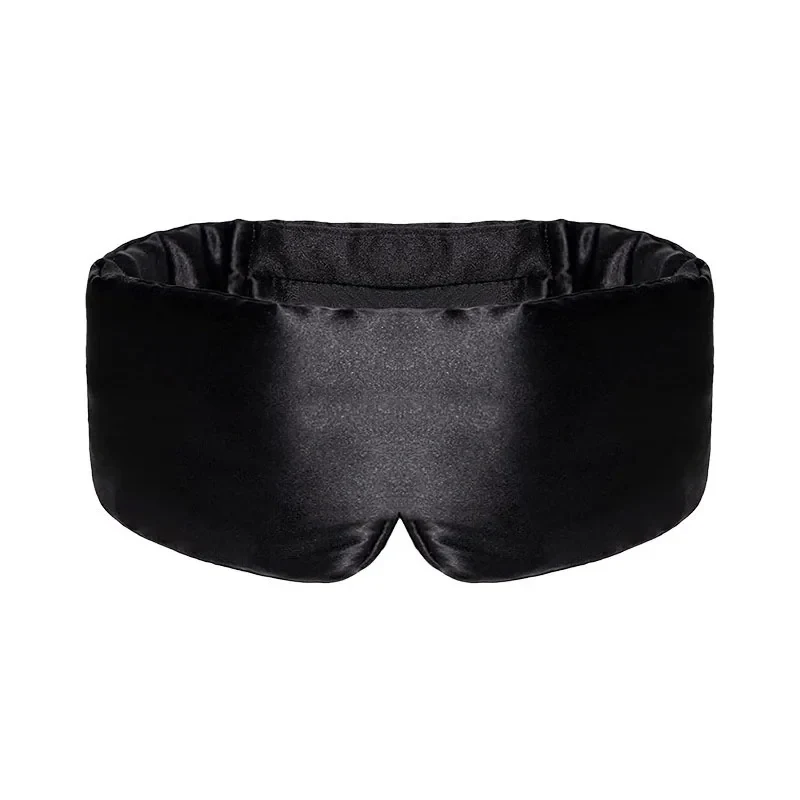
Different distractions. Different tools.
Start with what reaches you.
Light → mask
First, look at curtains and nearby lights. A mask adds a barrier over your eyes when you cannot control the room.
Look for coverage + a comfortable fitNoise → earplugs
First, reduce the noise you can control. Earplugs reduce sound reaching your ears; fit affects the result.
Look for fit + appropriate attenuationA diagram of how the tools work, not a measured comparison of their effectiveness.
Make it practical
What gets in your way?
Choose a distraction for a starting point. This is a comfort guide, not a medical assessment. Your choice is not saved or sent.
Inside one sleep laboratory
Less deep sleep lost with earplugs.
In a seven-night study, 25 healthy adults contributed data. Researchers measured sleep with polysomnography while playing recorded environmental noise.
Compared with a quiet control night · zero = the reference
Bars show model-estimated differences for one sleep stage, not total sleep time. The −6.5-minute difference from control was not statistically significant; this does not establish equivalence.
16.9 more minutes of N3 with earplugs than with the same noise alone in this study.
Table 3: standard errors 4.0 and 4.2 minutes for the two plotted estimates; no error bars shown. The earplug–noise comparison: SE 4.2 minutes, adjusted p < .001. Basner et al., 2026 — original study ↗
Short-term laboratory results, not a promise for your bedroom. Earplugs were less protective at the loudest level tested. These were Mack’s foam earplugs, not Sleepy Shop products.
The evidence, in perspective
Useful findings. Real limits.
Eye masks at home
Greco et al., 2023 found small improvements on selected next-day learning tasks and alertness in one experiment. Sleep duration and deep sleep did not significantly increase.
The results are debated: read the reanalysis and authors’ response. They do not establish a memory or intelligence benefit for every wearer.
Masks + earplugs together
Hu et al., 2010 found fewer arousals and more REM sleep in 14 healthy volunteers in a simulated ICU.
In actual ICU patients, Demoule et al., 2017 found no significant primary deep-sleep or clinical-outcome benefit, though prolonged awakenings fell. Nine participants did not wear earplugs all night because of discomfort or anxiety.
The specific Sleepy Shop products were not tested in these studies. Hospital findings may not transfer to home; combined interventions cannot tell us which accessory caused an effect.
Choose for the night you actually have.
Less unwanted light. Less distracting sound. Something you find comfortable. Those are useful aims without a promise of perfect sleep.
Read our mask fitting guide ↗ Explore sleep masks ↗