
The gentle evening edit
How to Wear a Bonnet at Night: A Comfortable, No-Pull Routine
Dry hair, room for your lengths and a band that does not pull. A practical guide to making a hair bonnet part of your evening.
Find your comfortable routine ↓
You finish your evening routine, tuck your hair into a bonnet, and wake up to find it somewhere under the pillow. Or it stays on, but the band leaves you wishing you had taken it off.
A useful bedtime accessory should feel easy to live with. Start with dry hair, enough room for your lengths and a band that sits comfortably without pulling. Then adjust the routine to your hair rather than forcing your hair into the accessory.
What does a bonnet actually do?
A bonnet contains your hair and puts a fabric layer between the covered strands and your bedding. That is its straightforward, practical role. Whether your style looks different in the morning depends on your hair, the fit and how much you move.
The American Academy of Dermatology advises keeping hair loose beneath a covering and notes that silk or satin coverings are gentler on hair than other materials. That guidance does not establish the performance of every product labeled “silky” or “satin-look.” Satin is a weave, not a fiber; a satin-look finish does not verify fabric composition. Check the actual material information rather than judging from shine alone. AAD: hairstyles and hair coverings
How to put on a bonnet before bed
Start with your usual hair routine. If you have curly or coily hair, do not add a vigorous dry-brushing step just to make it fit. The AAD recommends detangling those hair types with suitable conditioning and gentle tools; its nighttime suggestions include a loose braid or loose high ponytail when appropriate. AAD: curly hair care
Let your hair dry before using the Sleepy Shop bonnet. Remove sharp clips that might catch the fabric. You do not need a tightly secured bun underneath it.
Gather your lengths loosely into the crown. Make space for the ends instead of packing everything into a compressed ball.
Settle the band around your hairline. Keep it clear of your eyes and avoid pressure on your ears. Lie in your usual sleeping position for a moment and check how it feels.
In the morning, lift the band gently, release your hair and use your usual finishing routine. Air the bonnet before putting it away.
The last four steps follow the Overnight Hair Bonnet’s use and care guidance.
Why does my bonnet keep falling off?
First, check two different things: the band’s fit around your head and the space available for your hair. A bonnet can feel roomy at the edge while still being too small for the amount of hair inside it.
Try redistributing your lengths and checking where the band sits. If it slips repeatedly, a different size or construction may suit you better. Tightening everything until it hurts is not a good fix.
Repeated pulling can damage hair. The AAD advises changing styles that cause pain or scalp stinging, and seeking a dermatologist’s advice about thinning or hair loss. Stop using a fit that pulls at your hairline. AAD: avoiding traction
Can you wear a bonnet with wet hair?
For the Sleepy Shop bonnet, use dry hair and let the bonnet itself dry completely before wearing it to bed. It is a nighttime hair covering, not a waterproof cap or drying tool. Product guidance
Be careful not to confuse this with advice to brush every hair type dry. Wet hair needs gentle handling, while tightly curled or textured hair can benefit from being detangled wet. Those are hair-care decisions, separate from when to put the bonnet on. AAD: styling without damage
Can you wear a bonnet with straight hair?
You can choose a bonnet to contain straight hair, too. Think about what you want from it: keeping loose lengths together may be useful even when preserving curls is not the goal.
Leave room inside and pay attention to how the band and gathered hair affect your style. A bonnet cannot promise a crease-free blowout or the same result for every hair type. If wearing one feels distracting, you do not have to make it part of your night.
What should you check before buying?
Look for a clear description of the finish, band and sizing. For the Sleepy Shop Overnight Hair Bonnet, the listing describes a gathered crown, a broad fabric band and a smooth, satin-look finish. “Satin-look” describes its appearance; it is not confirmation that the bonnet is silk or verification of its fiber composition.
The supplier’s nominal head-circumference reference is 50–58 cm, approximately 19.7–22.8 inches, with a crown diameter around 30 cm, or 11.8 inches. These are references rather than a universal-fit promise. Hair volume matters as well as head size.
Follow the care label supplied with your bonnet. Do not assume machine washing is suitable unless the label says so, and let it dry fully before wearing or storing it.
A comfortable bonnet routine is simple: contain your hair, leave it room, and keep the fit gentle.
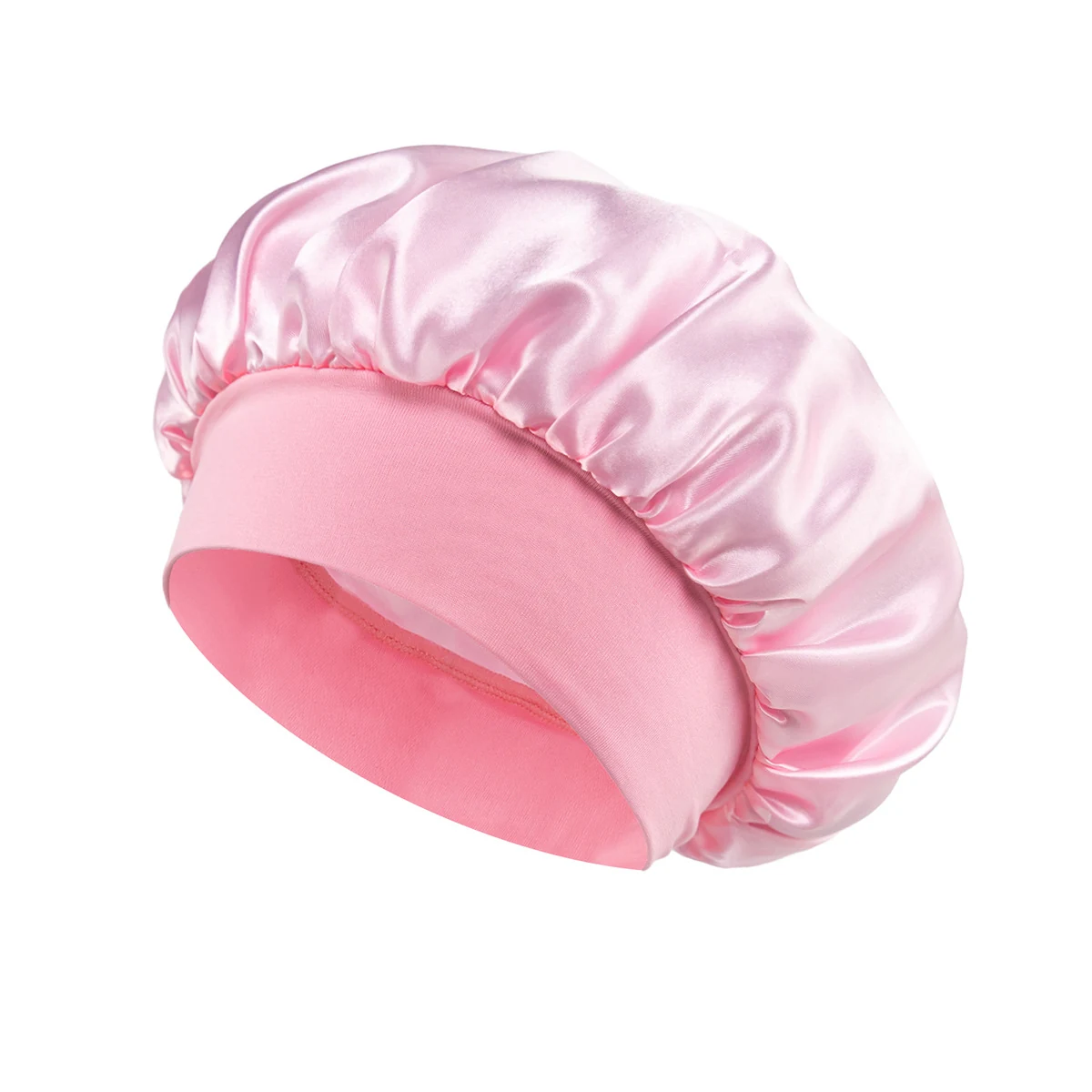
From the Sleepy Shop collection
Overnight Hair Bonnet
A gathered crown, a broad fabric band and a smooth, satin-look finish. Compare the shape, sizing and care details with what you need.
Satin-look describes appearance, not verified fiber composition. No universal-fit or stay-on promise.
Explore the Overnight Hair Bonnet ↗Make room for your evening.
A calmer bedside setup ↗All journal stories ↗This guide draws on AAD hair-care advice and the product’s use instructions. It is not a clinical study of this bonnet, and does not imply AAD endorsement of Sleepy Shop.