
The fit guide
How to use a contour pillow
A place for your head. Room for your shoulders. A fit you can relax into.
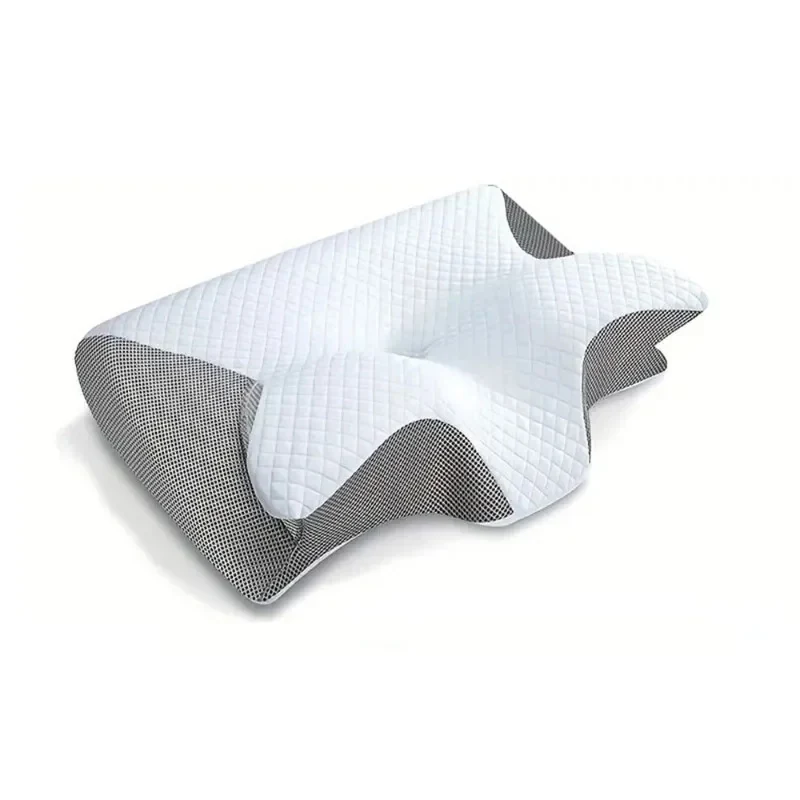 Butterfly
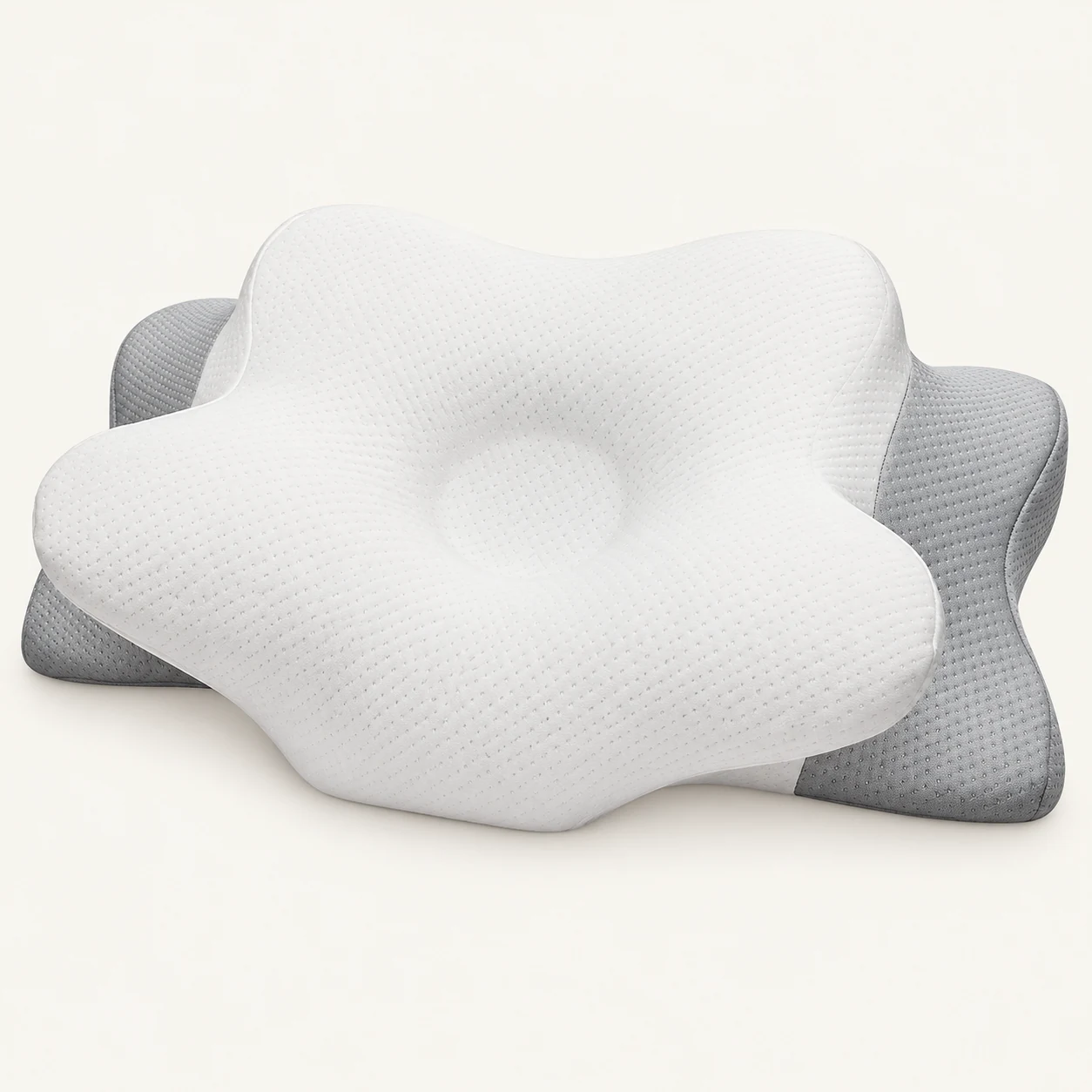 Cloud
You lie down, move the pillow a little closer, then wonder whether your shoulder belongs on it. With a shaped pillow, those small placement questions matter. The curves give you a starting point; your body and mattress tell you whether that starting point feels comfortable.
Here’s how to position the pillow and check the fit on your own bed. We’ll use the Butterfly and Cloud pillows from our collection to make the details easier to see.
At a glance: your first fit check
- Set the shaped surface facing up.
- Start with your head in the central recess.
- Let your shoulders rest on the mattress beside the pillow.
- Check that your head feels supported without being pushed into an awkward angle.
- Stop if the position causes pain. You don’t need to push through discomfort.
This guide is about everyday comfort for adults.
Get to know the shape before lying down
A contour pillow has changes in height across its surface. That makes the overhead view only part of the story. Look at an angled view too: where is the central dip, how does the surface rise around it, and how is the edge near your shoulders shaped?
The Butterfly Contour Sleep Pillow has a recessed center, raised surrounding contours, and a butterfly-shaped outline. The curves along the edge leave space beside your shoulders.
The Cloud Contour Sleep Pillow has a shallow central recess and broad side sections. Its outline and surrounding contours differ from Butterfly, so compare the whole shape rather than choosing by the name alone.
For these two designs, begin with the shaped surface up and your head in the central recess. Keep your shoulders on the mattress beside the pillow.
For Butterfly and Cloud, use each model’s own shape and instructions to guide placement.
Butterfly: three details to find
- Central recess
Start with your head here. - Raised surrounding contours
Notice how the surface changes height. - Curved front edge
Let your shoulders rest beside it, on the mattress.
Let your shoulders stay on the bed
Place the pillow flat on the mattress you normally use. Lie down gently with your head in the central area, then bring the pillow near your shoulders without climbing your upper body onto the pillow.
For this starting position, the pillow meets your head and neck while your shoulders remain on the mattress. You should not have to shrug, squeeze into the cutout, or hold yourself in place to make the outline work.
Move the pillow slightly closer or farther away until the edge rests comfortably beside your shoulders. If it keeps pressing awkwardly, try a different shape.
Try this before turning out the light
Settle into your usual position while you’re still awake. Let your shoulders relax. Notice whether you can breathe comfortably and move your head naturally.
Check your head position, not just the pillow’s outline
On your back, notice where your chin settles. Does the pillow push it toward your chest, or leave your head tipped back? Aim for an easy, supported position rather than forcing yourself into the dip.
On your side, check whether your head feels tipped toward the mattress or pushed away from it. Your shoulder should stay on the bed. If you have to tuck a hand beneath your head or hike your shoulder up to feel supported, reassess the setup.
Mayo Clinic’s sleeping-position guidance recommends supporting the neck in line with the chest and back. Use that as a starting point for noticing your own position.
If you switch between your back and side, check both positions on your usual mattress. Notice whether your head stays comfortably supported as you turn.
If you sleep on your stomach, don’t assume a raised contour will be comfortable. Mayo Clinic notes that stomach sleeping can strain the back. Follow any individual guidance you’ve been given, and choose a setup that does not force your head or neck into an uncomfortable position.
Test the pillow and mattress together
Your mattress is part of the fit. As you lie down, it gives under your body, and the pillow gives under your head. The height you experience depends on both.
This is especially worth noticing on your side: how far your shoulder settles into the mattress changes the space beneath your head. A pillow that feels comfortable on one bed may feel different on another, even though its dimensions have stayed the same.
Use your usual mattress and bedding for the check. If you change your mattress or add a topper later, check your pillow again. Avoid stacking another pillow underneath during the first check; that changes the height you’re trying to assess.
Check the whole setup
Head
Supported, without a forced tilt.
Shoulders
Resting on the mattress beside the edge.
Mattress
Check after your body settles.
Notice when it’s time to choose another fit
Pause and reassess if:
- Your chin feels pushed up or down.
- Your head feels tilted when you lie on your side.
- The edge presses into your shoulder or makes you shrug.
- You keep bracing with your hand to hold a comfortable position.
- You feel pain or notice new tingling or numbness.
Stop using a position that causes pain; a break-in period should not mean pushing through it.
If pain continues, worsens, or comes with symptoms such as tingling or numbness, seek advice from a qualified healthcare professional. The UK NHS neck-pain guidance explains when to get help. These pillows are comfort accessories, not treatments; follow any individual medical advice you’ve been given.
Keep it simple
Find the center. Leave room for your shoulders. Check the fit on your own bed. The useful question is whether you can settle comfortably, without forcing your body to match the pillow.
From the Sleepy Shop collection
Butterfly Contour Sleep Pillow
Compare the recessed center, butterfly outline, and curved shoulder edge.
See the Butterfly pillow ↗Cloud Contour Sleep Pillow
Look closely at the shallow center, surrounding contours, and broad side sections.
See the Cloud pillow ↗Your next quiet moment